Yes, two others have already suggested Newton Fractals #1696 and #1626 while also referring to 3b1b's video on the subject https://www.3blue1brown.com/lessons/newtons-fractal, but there is a bigger picture that folks (including Grant) are missing. Newton's method $x_{n+1}=x_n\frac{f(x_n)}{f'(x_n)}$ is not the only method for finding roots nor is it the only way to make these kinds of fractals.
With one change you can go from:
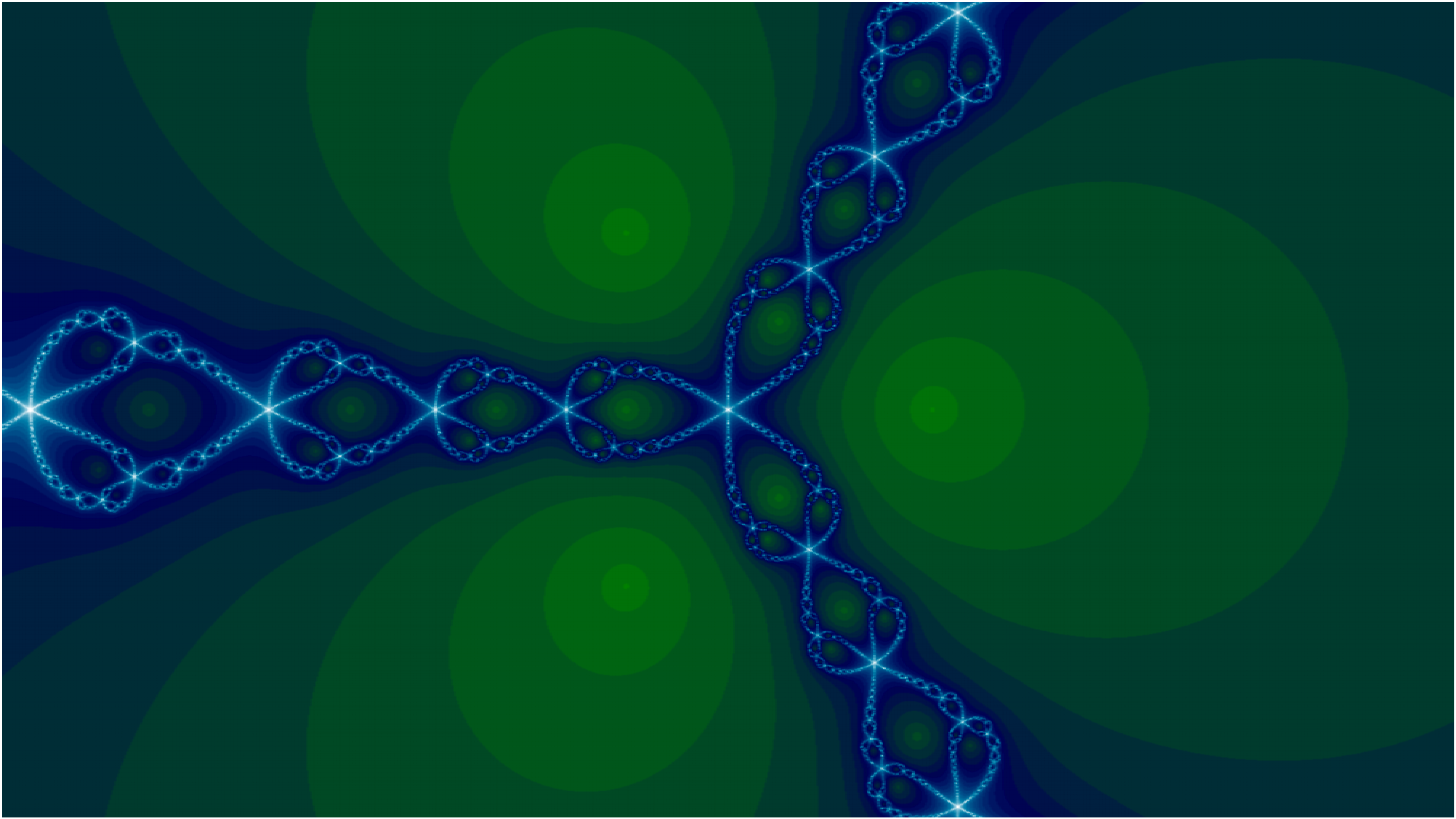
to
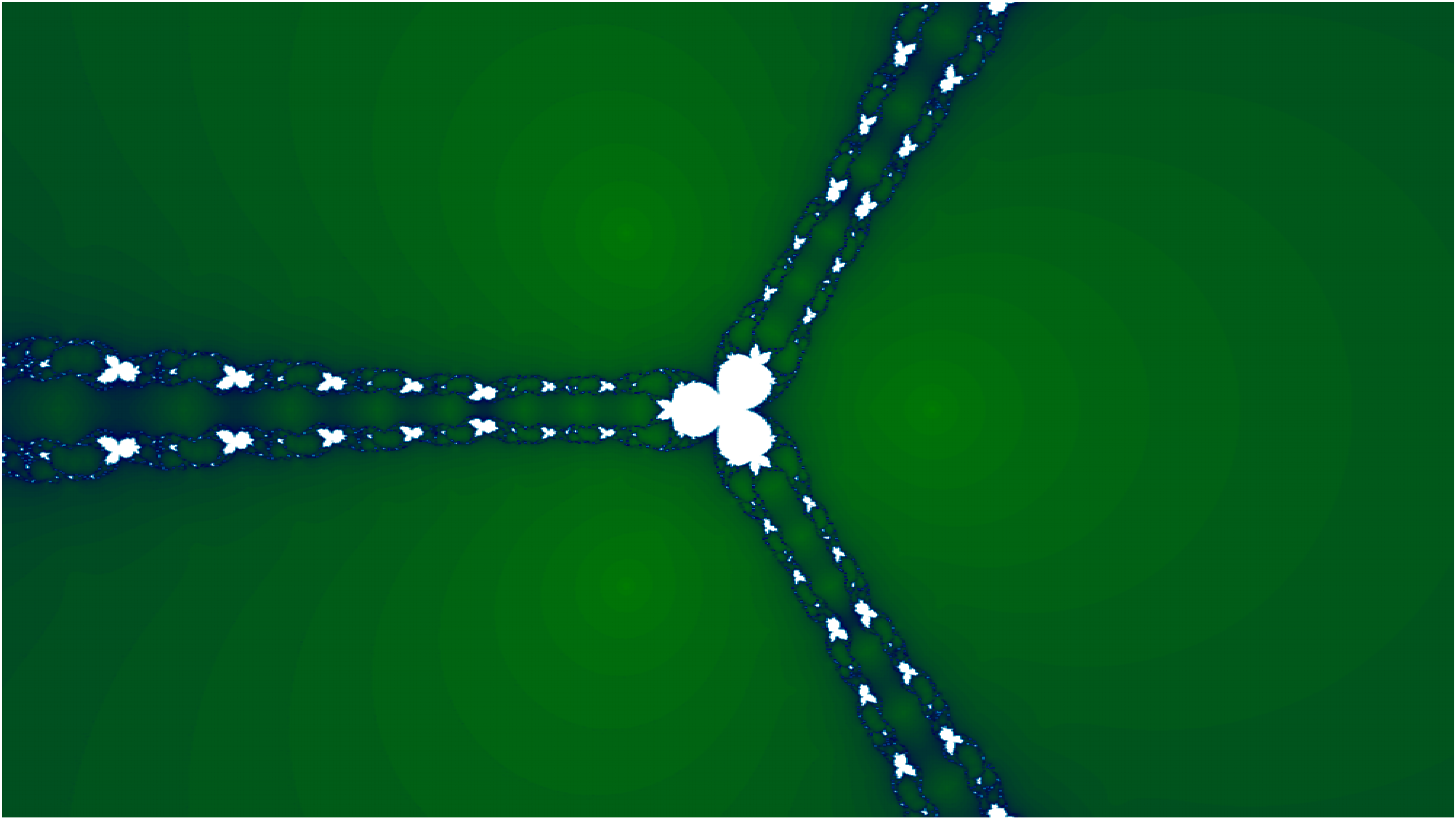
to
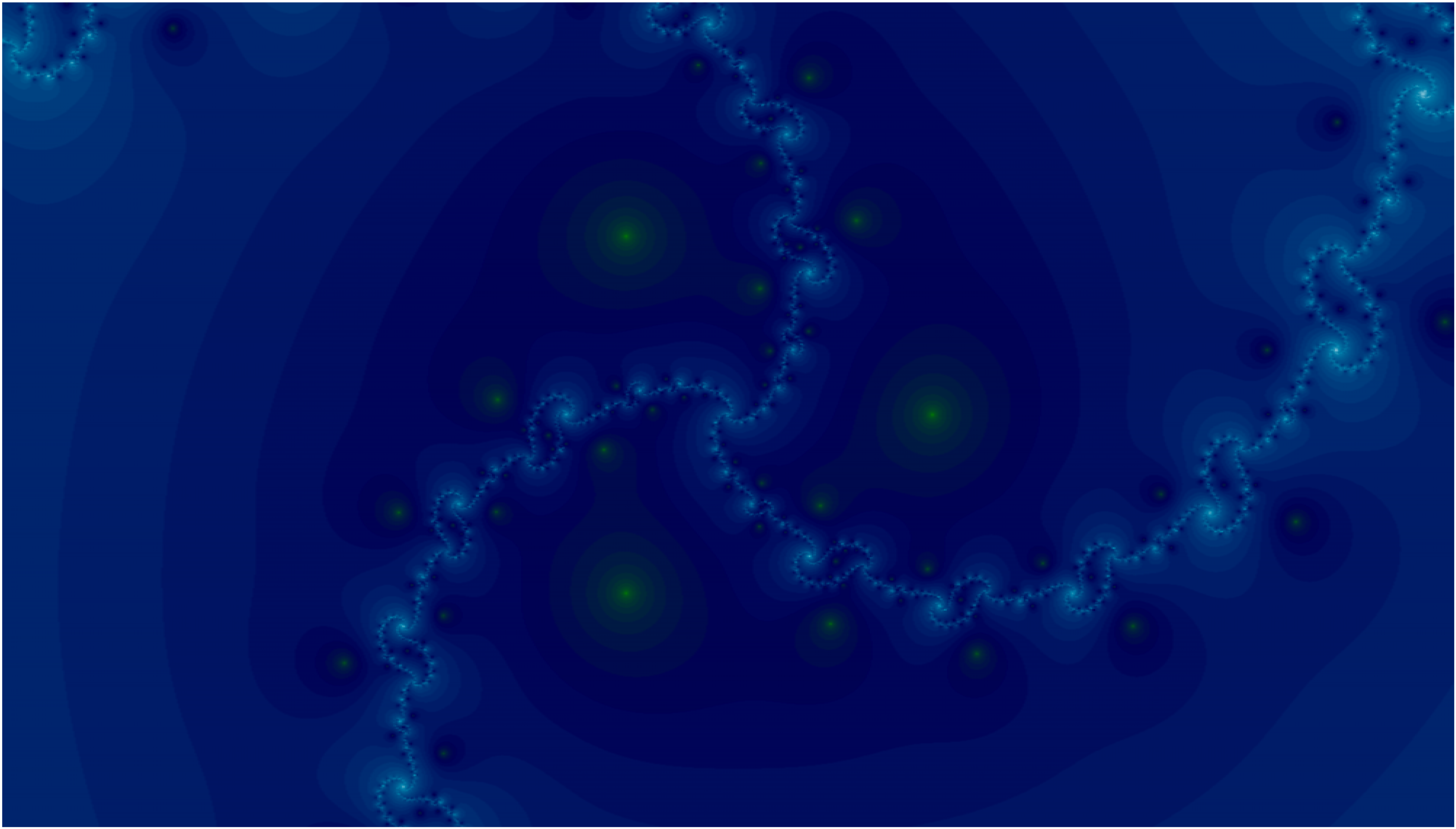
to
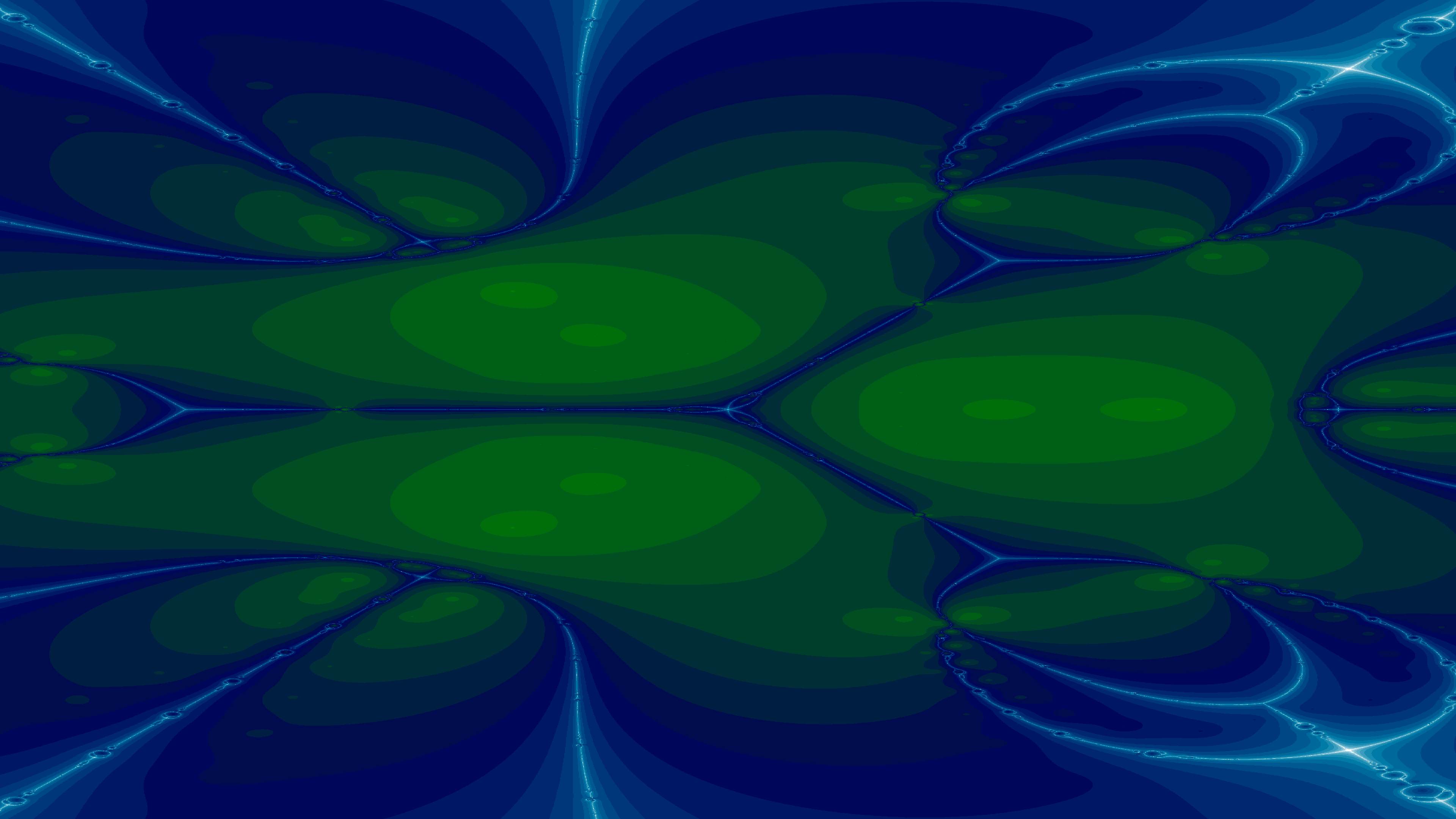
All by making minor changes to the iteration function like Halley's Method, Householder's Method, or Jenkins-Traub. These were all essentially different methods of solving $z^3-1=0$.
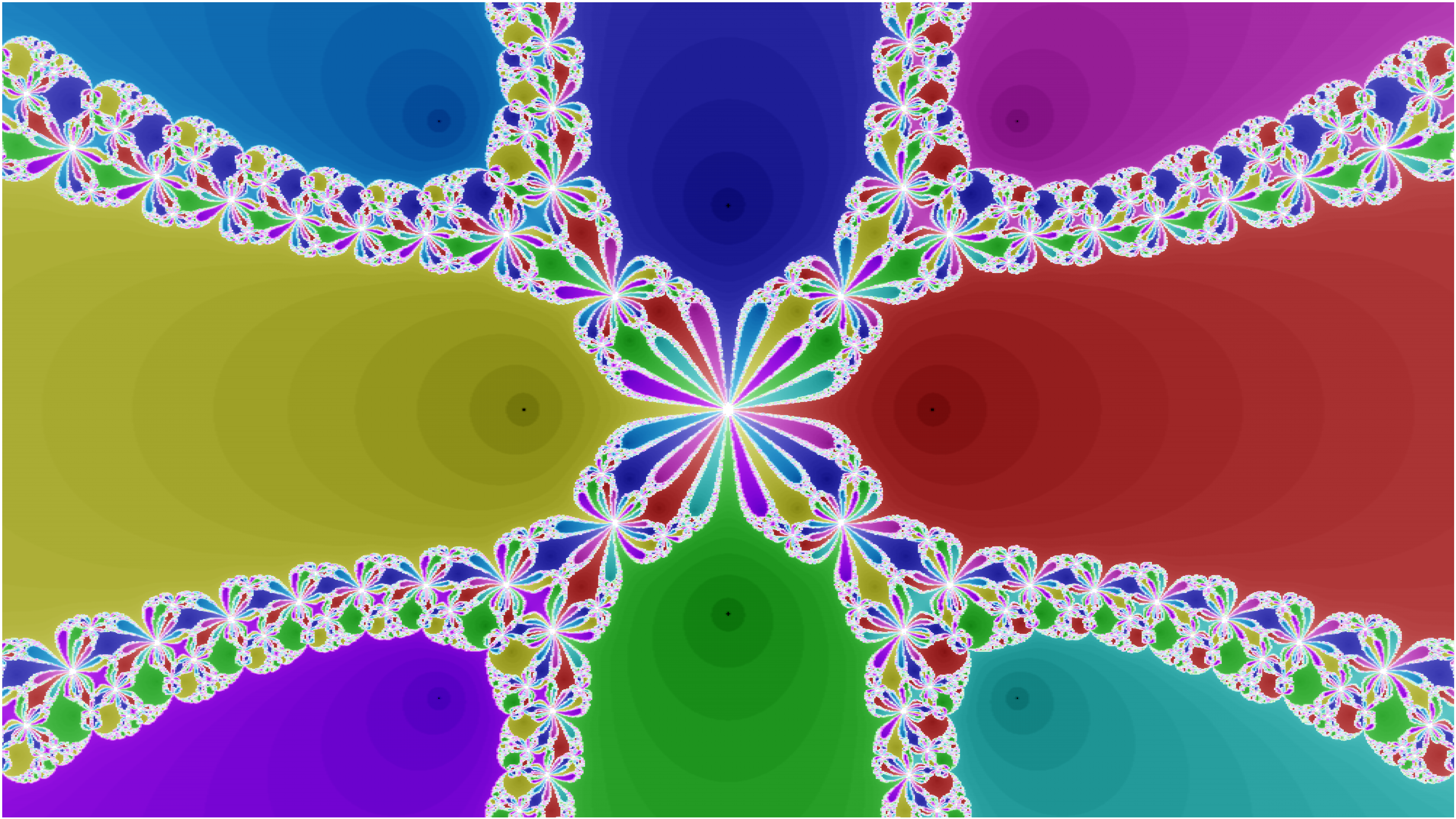
If you change the input function to something like $z^8-15z^4-16=0$ and include a scaling factor you get:

I was just coloring on if it converged or not, but you can also color based on which root it finds such as:
The code that generated these images is available via https://github.com/osveliz/numerical-veliz shared by the author (me) and they are very small programs. I have a Numerical Analysis YouTube channel with 12k subscribers and I would appreciate a shout-out if you decide to use this. I made my original video on Newton Fractals, 3 years before 3b1b's version, but everyone watches that one now. If you would like to collaborate on something, I would be glad to work with you.

Yes, two others have already suggested Newton Fractals #1696 and #1626 while also referring to 3b1b's video on the subject https://www.3blue1brown.com/lessons/newtons-fractal, but there is a bigger picture that folks (including Grant) are missing. Newton's method$x_{n+1}=x_n\frac{f(x_n)}{f'(x_n)}$ is not the only method for finding roots nor is it the only way to make these kinds of fractals.
With one change you can go from:
to
to
to
All by making minor changes to the iteration function like Halley's Method, Householder's Method, or Jenkins-Traub. These were all essentially different methods of solving$z^3-1=0$ .
If you change the input function to something like$z^8-15z^4-16=0$ and include a scaling factor you get:
I was just coloring on if it converged or not, but you can also color based on which root it finds such as:
The code that generated these images is available via https://github.com/osveliz/numerical-veliz shared by the author (me) and they are very small programs. I have a Numerical Analysis YouTube channel with 12k subscribers and I would appreciate a shout-out if you decide to use this. I made my original video on Newton Fractals, 3 years before 3b1b's version, but everyone watches that one now. If you would like to collaborate on something, I would be glad to work with you.